

News Center

Subscribe to News Center feed
Online center for Society, publication, and other wildlife news
Updated: 37 min 33 sec ago

Wildlife News Roundup (Feb 2-8, 2013)

Mon, 2013-02-11 13:34

President Barack Obama and his nominee for Secretary of the Department of the Interior, Sally Jewell, applaud outgoing Secretary Ken Salazar. (Credit: Pete Souza/The White House)

Sally Jewell Tapped for Interior
(San Francisco Chronicle)
In a break with tradition, President Barack Obama tapped business executive Sally Jewell to head the Interior Department, overseeing hunting, conservation and energy development on hundreds of millions of acres of public lands. Jewell’s long business background, including eight years as CEO of Recreational Equipment Inc., makes her a surprising choice to succeed Ken Salazar as Interior Secretary. More


NEWS FROM NORTH AMERICA

California Great White Sharks Get Protections for Now
(The Associated Press via KABC-TV)
The most feared predator in the ocean received new protections when a California commission decided the great white shark should be studied as a potential endangered species. The Fish and Game Commission unanimously voted to advance the candidacy of the shark, which means during a one-year study review it will receive the same protections it would if it were listed as endangered. More

Federal Officials Propose Endangered-Species Protection for Wolverine
(The Associated Press via Billings Gazette)
The tenacious wolverine, a snow-loving carnivore sometimes called the “mountain devil,” could soon join the list of species threatened by climate change — a dubious distinction putting it in the ranks of the polar bear and several other animals the government says will lose crucial habitat as temperatures rise. Federal wildlife officials proposed Endangered Species Act protections for the wolverine in the Lower 48 states. More

Report: America’s Wildlife Struggling to Keep Up with Changing Climate
(National Wildlife Federation)
The climate crisis is already changing the playing field for wildlife and urgent action is needed to preserve America’s conservation legacy, according to a new report released by the National Wildlife Federation. Wildlife in a Warming World: Confronting the Climate Crisis examines case studies from across the country illustrating how global warming is altering wildlife habitats. More

Ottawa’s Oil-Spill Plan for BC Can’t Cope with Coming Supertankers
(Vancouver Sun)
The Harper government’s disaster planning has not kept pace with proposals to greatly expand oilsand exports from B.C. ports using supertankers, Canada’s environment commissioner said. Scott Vaughan said in a report that the number of tanker trips from the West Coast will increase to 2,400 a year from 600 in 2010 because of increased exports of natural gas and oilsands crude via proposed pipelines to B.C. from Alberta. More

World’s Oldest Living Bird Gives Birth to a Hatchling at Age 62
(Global Post)
A 62-year old Laysan Albatross named “Wisdom” has successfully given birth to a chick, yet another remarkable achievement in this long-lived bird’s well documented life. Wisdom, the oldest living wild bird known to science, blew scientists away when they discovered that the bird — who would be pushing retirement age if she were human — had managed to successfully hatch a new chick, says the Washington Post. More

Red Squirrels Endangered, but Breeding Program Could Come to the Rescue
(Arizona Daily Star)
“Al” and “Bob” bound across their cages when Stuart Wells opens the door to their room at the Phoenix Zoo’s conservation center. It’s an act of aggression, says Wells, the zoo’s director of conservation and science. The Mount Graham red squirrels, isolated atop the Pinaleño Mountains in Southeastern Arizona, are territorial and defensive. They are also endangered. The Phoenix Zoo is Noah’s Ark for the only two Mount Graham red squirrels in captivity. More

Polar Bears ‘May Need to be Fed by Humans to Survive’
(The Guardian)
The day may soon come when some of the 19 polar bear populations in Canada, Alaska, Greenland, Norway and Russia will have to be fed by humans to keep them alive during an extended ice-free season or prevent them from roaming into northern communities. Some bears may have to be placed in temporary holding compounds until it is cold enough for them to go back onto the sea ice. In worst-case scenarios, polar bears from southern regions may have to be relocated. More

Florida Wildlife Officials Search for West Nile Crocodile on Loose
(NBC Miami)
Off the back roads of Florida’s Miami-Dade County, an unsolved mystery lingers amid quiet farmland. It began when a planter spotted a small crocodile near a canal in March 2011. But it wasn’t just any croc. It was one that belonged on another continent. “We really don’t know what happened to it,” said Jenny Ketterlin Eckles, a wildlife biologist with the Fish and Wildlife Conservation Commission. “We might not ever know what happened to it.” More

Student Research Team to Further Conservation Awareness of Bats in Mexico
(Texas A&M University)
A unique group of student researchers with a variety of interests, from botany to caving to theater arts, have one unifying goal: bat conservation. This spring, a team of three Texas A&M students will head to Mexico to conduct research on a species of bat known as the Mexican long-nosed bat. Ph.D. student Emma Gomez, who received her masters of science degree in environmental management, will lead the research team. More

WILDLIFE HEALTH AND DISEASE NEWS

Crabs Help Reef Fight Disease
(Science Alert)
A particular species of crab has been helping Great Barrier Reef coral combat white syndrome, a deadly disease that causes coral tissue to disintegrate. Joseph Pollock, from James Cook University’s School of Marine and Tropical Biology and the Australian Institute of Marine Science, has been studying the disease, and its unlikely helper, the “furry coral crab.” More

Experts: West Nile Virus Spreading Due to Mosquitoes in Orchards, Vineyards
(Science Daily)
Washington State University researchers have linked orchards and vineyards with a greater prevalence of West Nile virus in mosquitoes and the insects’ ability to spread the virus to birds, horses and people. The finding, reported in the latest issue of the journal PLOS ONE, is the most finely scaled look at the interplay between land use and the virus’ activity in key hosts. More

INTERNATIONAL NEWS

Report: Japanese Subsidies Keep Whaling Industry Afloat
(The New York Times)
A wildlife conservation group has said in a report that Japan has been propping up its whaling industry with nearly $400 million in tax money in recent years, stepping up subsidies even as the consumption of whale meat has slumped. The report, compiled by the International Fund for Animal Welfare, in Yarmouth Port, Mass., challenges assertions by the Japanese government that whaling is a tradition with wide support among Japanese consumers. More

Protection ‘Insufficient’ for Yangtze Finless Porpoise
(BBC)
Protection for highly threatened Yangtze finless porpoises in China is “insufficient,” researchers say. The mammals have suffered a dramatic decline and are now threatened with extinction. Researchers carried out a survey to the establish how the animals are distributed in the Yangtze river. They found current protected sections of the Yangtze do not cover all the areas where most porpoises were found. More

Giant Panda Habitat Threatened by Forest Reform
(Conservation International)
China’s recent achievements in giant panda conservation are at risk of being undermined by the reform of its system of collective forest tenure, said Conservation International scientists in a letter published in the journal Science. The reform of China’s 167 million hectares of forest — 345,700 hectares of which constitutes 15 percent of the panda’s remaining habitat — enables individual farming households to transfer or lease operation rights to outside enterprises. More

White-Nose Syndrome Continues to Spread

Thu, 2013-02-07 12:31

(Credit: Marvin Moriarty/USFWS)

Mammoth Cave National Park in central Kentucky has confirmed the presence of white-nose syndrome (WNS), a fungus that grows on the muzzle, ears, and other body parts of bats and is responsible for the death of over 5.5 million bats in eastern United States and Canada over the past 6 years. WNS was confirmed three weeks ago in the parks’ Long Cave population of long-eared bats. Long Cave, which is closed to the public, is the park’s largest hibernaculum and thus the confirmed presence of WNS could be potentially devastating to all nine species of bats occurring in the park, including endangered Indiana and gray bats. Mammoth Cave National Park is the ninth national park affected by WNS.

Last week a bat in Missouri tested positive for WNS. Six counties in Missouri now have confirmed cases. WNS was first documented in New York in late 2006 and has since rapidly spread across eastern North America. WNS disrupts hibernation and often leads to erratic behavior. WNS is suspected to be the cause of strange behavior in bats being reported in Great Smoky Mountains Nation Park, which straddles Tennessee and North Carolina. Bats in Great Smoky Mountain National Park have been active during the day and flying into park visitors. The cause of the bats’ strange behavior will be confirmed later this month during an annual census.

Bats are an economically important species, helping to reduce insect populations, including many

(Credit: Susi von Ottingen/USFWS)

agricultural pests, and serve as pollinators. To learn more about WNS visit White-nose Syndrome.org, and the white-nose syndrome national plan.

For previous news on WNS covered by The Wildlife Society, please visit the following links:

WNS Spreads to North Carolina

Bats and WNS: Cave Closures, Spread to KY, Economic Losses

News Update: WNS Reaches Indiana

New York Bats Slowly Rebound from MNS

Status of FY12 Appropriations for Wildlife Programs

Sources: National Park Service (January 14, 2013), E&E News (January 16, 2013), The Washington Post (January 20, 2013), Greenwire (January 21, 2013), Greenwire (January 28, 2013), White-nose Syndrome.org

Wildlife News Roundup (Jan 26-Feb 1, 2013)

Mon, 2013-02-04 12:46

Barred Owl (Credit: Alannyiri/Wikimedia)

Shooting of Owls OK’d to Protect Endangered Species
(CBC)
The British Columbia government has approved the shooting of one species of owl in a last-ditch effort to save their endangered cousins, as the number of northern spotted owls continues to decline decades after they became the mascot of the “War in the Woods” over old-growth logging. Northern spotted owls are on the brink of extinction in Canada, with only 10 birds remaining in the wild in southwestern B.C., according to some estimates. More

NEWS FROM NORTH AMERICA

Team Ready to Champion Sage Grouse Conservation
(Missoulian)
In Nevada’s ongoing struggle to protect the sage grouse without federal intervention, the state has selected a team of five people to champion the bird’s cause. Federal action could come with devastating side effects statewide, officials fear. The five-member Sagebrush Ecosystem Technical Team was formed to implement the state’s plan and will meet for the first time Feb. 21. More

British Columbia Badgers on Brink of Extinction
(St. Albert Gazette)
An endangered population of badgers in British Columbia’s Columbia Valley and surrounding Kootenay region has dropped to as few as 100 mature individuals and remains on the brink of extinction. The Committee on the Status of Endangered Wildlife in Canada assessed the eastern population as endangered. Road mortality, habitat loss and urban development continue to threaten badgers. More

Nevada Wildlife Director Resigns
(Reno Gazette-Journal)
The director of the Nevada Department of Wildlife resigned abruptly at the request of Gov. Brian Sandoval following months of pressure from representatives in rural Nevada over deer management and agency efforts to stave off federal protection for sage grouse. In an email letter to staff obtained by the Associated Press, Ken Mayer said the decision to take the agency in another direction is the governor’s prerogative. More

Researchers Seek Data on Role of Whitebark Pine in Changing Grizzly Populations
(Big Horn Radio Network)
In the ongoing deliberations over federal protections for Yellowstone area grizzly bears, debate often focuses on a fixed number of total bears living in the region. Counting bears — or more appropriately, estimating grizzly bear populations — is essential to helping determine when government recovery goals have been met. But just as important is tracking trends in population changes, and trying to determine the causes of those changes. More

Litter Putting Dolphins at Risk
(The News-Press)
We love dolphins to death. “Literally,” said Kim Bassos-Hull, senior biologist and research associate from the world-renowned Sarasota Dolphin Research Program, based at Mote Marine Laboratory in Sarasota Bay, Fla. Bassos-Hull knows firsthand how human affection might place these marine mammals in danger after monitoring and rescuing dolphins for two decades in Southwest Florida. More

Montana Officials Proposing to Farm Portion of Wildlife Management Area
(Billings Gazette)
Twenty percent of a grain crop raised this year in Montana on 125 acres of Isaac Homestead Wildlife Management Area would be left standing for wildlife under a lease proposal being reviewed by Montana Fish, Wildlife and Parks. The 1,169-acre WMA is located in two separate parcels about seven miles west of Hysham on the north side of the Yellowstone River. It was initially purchased in 1969 with additional property added in 1970 and 1973. More

Alaska’s Board of Game Eyes Wolf Control on Gravina Island
(Anchorage Daily News)
Alaska’s Board of Game took a step toward a potential wolf control program on Gravina Island recently when it directed the state to prepare an “operational plan” for the board to consider in March. Meeting in January in Sitka, the board accepted the feasibility studies completed by the Alaska Department of Fish and Game regarding the potential for wolf control programs on Gravina Island and in limited areas near Petersburg to help boost deer populations. More

WILDLIFE HEALTH AND DISEASE NEWS

Mercury’s Silent Toll on the World’s Wildlife
(Yale Environment 360)
This month, delegates from more than 140 countries gathered in Geneva and finalized the first international treaty to reduce emissions of mercury. The treaty — four years in the works and scheduled for signing in October — aims to protect human health from this very serious neurotoxin. But barely considered during the long deliberations, according to those involved in the treaty process, was the harm that mercury inflicts on wildlife. More

Officials Tracking Distemper Outbreak in Raccoons
(Mail Tribune)
Wildlife biologists are investigating an apparent outbreak of canine distemper that’s racing through the Oregon raccoon population. The Oregon Department of Fish and Wildlife in the past two weeks has collected eight raccoons that turned up dead in Ashland, Talent, Phoenix, Jacksonville and south Medford, and six already have been confirmed as suffering from distemper. More

Officials: British Columbia Man Died from Hantavirus
(CBC News)
Health officials from British Columbia and Yukon are in Atlin, B.C., looking for the source of a deadly case of Hantavirus. The rare disease is normally spread through the urine and feces from deer mice. Officials confirmed the virus was responsible for the death of Gerhard Holmok, 45. Holmok died suddenly Jan. 9 at the Whitehorse hospital. More

Common Pesticides Can Kill Frogs Within an Hour
(The Guardian)
Widely used pesticides can kill frogs within an hour, new research has revealed, suggesting the chemicals are playing a significant and previously unknown role in the catastrophic global decline of amphibians. The scientists behind the study said it was both “astonishing” and “alarming” that common pesticides could be so toxic at the doses approved by regulatory authorities, adding to growing criticism of how pesticides are tested. More

Sea Lion Pup Disease Death Worries Ranger
(The Southland Times)
There are fresh concerns about the fate of the critically endangered New Zealand sea lion, with disease found to have struck down Dunedin’s latest arrival. The Department of Conservation has confirmed a two-week-old young female sea lion died from klebsiella, a disease that affects the heart and lungs. Massey University was unable to determine what caused the pup, born to female sea lion Gem, to get sick. More

INTERNATIONAL NEWS

Corridors Critical for India’s Big Cats
(National Geographic)
Every day, little by little, our species is creating new islands. These are not islands in the sea. They are patches of forest, grassland, mountainside and swamp that encompass what remains of the wild. Unlike islands dotted across the sea, though, there are sometimes pathways between these protected swaths that permit organisms to traverse the small percentage of their range that remains open to habitation. More

57 Rhinos Lost During First Month of Year
(Wildlife News)
South Africa has just released the rhino poaching figures for January, and the news is not good: 57 rhinos have been lost in the country so far this year, with Kruger National Park losing 42 rhinos. The good news is the head of South Africa National Parks believes that the tide is beginning to turn. SANParks Chief Executive Officer, Dr David Mabunda, said despite increased incursions from Mozambique, anti-poaching operations were starting to yield results. More

Comment Period on Wood Bison Reintroduction

Fri, 2013-02-01 15:50

(Credit: Laura Whitehouse/USFWS)

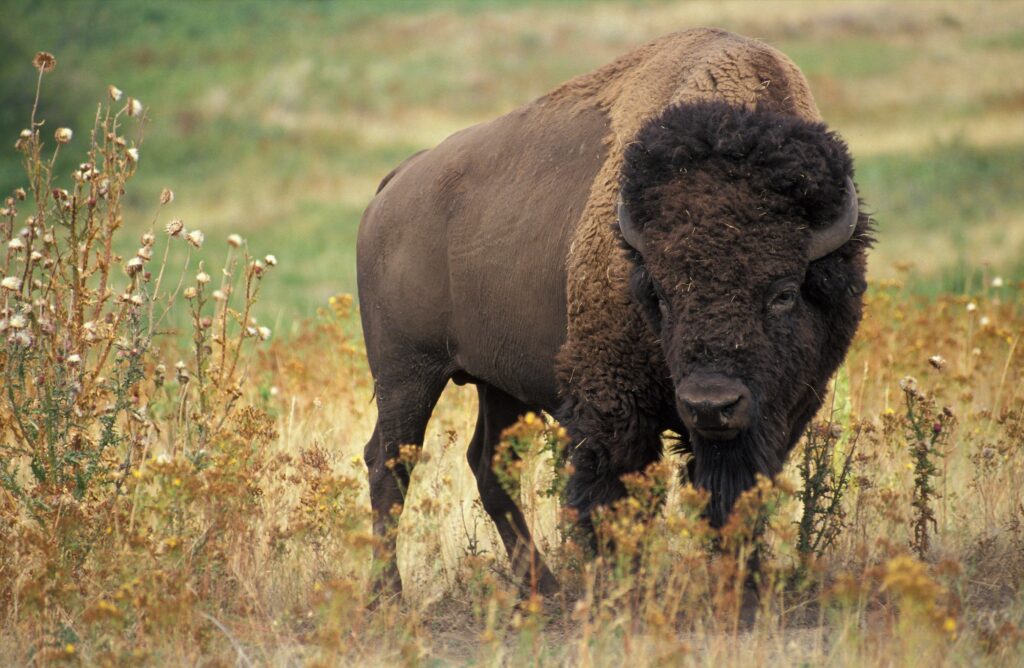
The US Fish and Wildlife Service invites comments on a proposed rule that would establish a nonessential population of wood bison in the Yukon Flats, Minto Flats, and lower Yukon River areas of Alaska. The nonessential population designation serves to ease Endangered Species Act restrictions that could potentially impact gas and oil development in the proposed areas for reintroduction.  After one to three herds are successfully established, regulated hunting will be included as part of the management plan to manage herd size, reduce the potential for spreading disease, increase public safety along roads, and promote public support. A disease-free captive wood bison herd from the Alaska Wildlife Conservation Center in Portage, AK will serve as the source population for the reintroduction.  Alaska Department of Fish and Game will be the primary managing agency. Wood bison, North America’s largest land animal, were extirpated from Alaska by the early 1900s as the result of over harvesting and habitat fragmentation. Due to successful reintroduction efforts in Canada, the Wood Bison was reclassified as threatened in 2011.

Comments may be submitted through the Federal eRulemaking Portal (search for docket FWS-R7-ES-2012-0033) or by mailing comments to:  Public Comments Processing, Attn: FWS-R7-ES-2012-0033; Division of Policy and Directives Management; U.S. Fish and Wildlife Service; 4401 N. Fairfax Drive, MS 2042-PDM; Arlington, VA 22203. For additional information, contact: Sonja Jahrsdoerfer, 1011 East Tudor Road, Anchorage, AK 99503, (907) 786-3323, or email woodbison-AK@fws.gov. The comment period closes March 4, 2013.

Source: Federal Register (January 18, 2013)

Surprising New Find

Fri, 2013-02-01 14:56

February 2013 issue of Wildlife Monographs. (Credit: TWS)

A team of scientists has just completed a comprehensive analysis of 108 years’ worth of data on the size of horns and antlers among 25 trophy categories  in North America and discovered that, over the past century, size of trophy horns and antlers for most species has declined slightly.

The team of six biologists—from Idaho State University, the University of Montana, the Arizona Game and Fish Department, and the California Department of Fish and Game, led by Dr. Kevin L. Monteith, now at the University of Wyoming—analyzed 22,000 records of trophy categories of big game from North America, including mule deer, mountain sheep, and moose. Publishing their results in The Wildlife Society’s newest Wildlife Monographs, the authors found a small (less than 2 percent) but consistent decline in horn and antler size across most trophy categories over the past century.

Through careful analyses, the biologists ruled out several potential causes of the declines, including climate change, habitat alterations, and the “sociological effect” of increased interest among hunters in submitting trophies to the record books. Instead, the analyses provided moderate support for intensive harvest of males as the most likely explanation for the declines, which lowers male age structure, allowing fewer animals to reach trophy status prior to harvest.

The findings have potential implications for management of many species, although the small declines in size of trophy horns and antlers may be of little importance relative to the benefits of hunting as the cornerstone of wildlife management in North America. Nevertheless, the authors offer several recommendations to managers concerned about balancing overall opportunity to hunt with opportunity to harvest large males.

The authors were “initially quite surprised” by the results, says Terry Bowyer, who oversaw the analyses at Idaho State University. Yet he adds that no other study has spanned the time (108 years), geographic extent (all of North America), and range of ungulate species (25 trophy categories), or amassed such a huge sample size (22,000 animals), using precise official horn and antler measures of the Boone and Crockett Club. “There is little doubt that our findings are real,” he concludes. “We hope our research will be of value to fish and game agencies charged with the management of these important natural resources.”

News Update: Senate Passes Sandy Relief Package

Wed, 2013-01-30 13:09

Damage by hurricane Sandy to the only road leading into Sachuest Point National Wildlife Refuge in Rhode Island (Credit: USFWS)

On Monday January 28th, the Senate voted to approve (62-35) the $50.5 billion Sandy Relief Package passed by the House on January 15th. President Obama says he plans to sign the bill as soon as he receives it.

Sources: USA Today (January 29, 2013), NBC News (January 29, 2013), E&E News (January 29, 2013)


DOI Secretary Ken Salazar to Step Down

Mon, 2013-01-28 16:55

Secretary of the Interior Ken Salazar displays his Get Your Goose On! towel at a Colorado event to broaden awareness of the Service and the Refuge System.
Credit: Marla Trollan/USFWS Source: USFWS

Department of Interior Secretary Ken Salazar announced his plan to step down from his position in March. Salazar will leave the Department of Interior after just over four years of service to return home to his family in Colorado. In his statement on January 16th, Salazar thanked the 70,000 DOI employees for their dedication as custodians of America’s natural and cultural resources. He also took the opportunity to thank President Obama for his friendship while serving as Senators and for honoring him with the opportunity to serve in his cabinet for the past four years.


Since being unanimously confirmed by the Senate in 2009, Secretary Salazar has helped to mark a new era of conservation in the U.S. through implementing community-driven, science-based conservation of ecosystems and landscapes.  The Wildlife Society praised Secretary Salazar for his strong leadership and commitment to protecting America’s wildlife and natural resources. Dr. Winifred Kessler, President of The Wildlife Society, noted that “Throughout his tenure as Secretary, Ken Salazar has worked hard to maintain high standards of scientific integrity and to promote the use of science in programs, decisions, and policies of the Department of Interior.  The Wildlife Society is grateful for those efforts and for Secretary Salazar’s visionary leadership on cross-agency collaboration in support of landscape-scale conservation.”


In particular, many believe his lasting legacy will be his efforts to engage diverse stakeholders in public land management and establishing partnerships with states, localities, and landowners.  Under his leadership, the DOI established seven new national parks and ten national wildlife refuges, authorized thirty-four solar, wind, and geothermal energy projects on public lands, established the first program for offshore wind leasing, and revamped the DOI’s management of oil and gas resources.


Interior Secretary Ken Salazar at the newly established Valle de Oro National Wildlife Refuge near Albuquerque, NM.
Credit: Tami Heilemann/DOI Source: USFWS

Secretary Salazar has said he is most proud of improving the federal government’s relationship with American Indians, reforming the oil and gas program, and broadening the clean energy agenda.


Secretary Salazar oversaw the government’s response to the Deepwater Horizon spill, resulting in an overhaul of safety standards for oil and gas development. Since Salazar’s appointment as Secretary, the DOI has undergone the largest overhaul of its oil and gas program in US history, splitting the Minerals Management Service into three independent agencies. Under his direction, the department has new ethics standards and aims to use science-based decisions on where and how to develop oil and gas resources.


Before his role as Secretary of the Interior, Ken Salazar served as director of Colorado’s Department of Natural Resources, Colorado’s Attorney General, and then represented Colorado as a Senator from 2005 to 2009, sitting on the Energy and Natural Resources Committee.  Ken Salazar earned a bachelor’s degree in political science from Colorado College and a law degree from the University of Michigan. Salazar’s decision to step down as Secretary of the Interior follows similar announcements from members of Obama’s first-term cabinet including Secretary of State Hillary Clinton, Defense Secretary Leon Panetta, Treasurer Secretary Tim Geithner, and Environmental Protection Agency Administrator Lisa Jackson.

Sources: Department of Interior (January 16, 2013), Denver Post (January 16, 2013), USA Today (January 16, 2013), National Wildlife Refuge Association (January 17, 2013), American Forests (January 17, 2013)

Wildlife News Roundup (Jan 19-25, 2013)

Mon, 2013-01-28 08:00

American black bear (Credit:John Sullivan/Wikimedia)

Montana Houndsmen Support Bear Hunting, Oppose Mountain Lion Trapping
(Billings Gazette via Missoulian)
Montana houndsmen turned out in force to oppose a bill that would allow trapping of mountain lions and support one that would allow the Fish, Wildlife and Parks Commission to authorize hunting black bears with hounds. Supporters of House Bill 144 touted the use of hounds to hunt black bears as a way to promote family time together, remove bears that are preying on elk calves, remove dangerous bears and those causing problems with homeowners and beekeepers. More

Wisconsin Cuts Harvest Quota for Bears
(Milwaukee Journal Sentinel)
Record kills by hunters in recent years have reduced the black bear population in Wisconsin, prompting wildlife officials to reduce the harvest quota and the number of permits available in 2013. The Natural Resources Board approved a plan to cut the bear harvest quota by 13 percent and issue 5 percent fewer kill permits. Wildlife managers had recommended the reductions based on preliminary estimates of a bear population study and data from recent hunting seasons. More

Mercury Emissions Threaten Ocean, Lake Food Webs
(Environmental Health News)
As United Nations delegates end their mercury treaty talks, scientists warn that ongoing emissions are more of a threat to food webs than the mercury already in the environment. At the same time, climate change is likely to alter food webs and patterns of mercury transport in places such as the Arctic, which will further complicate efforts to keep the contaminant out of  people and their food. More

California Senior Community to Sterilize Deer Population
(The Oakland Tribune)
They’re chewing through the landscape and becoming bolder by the day. So frustrated management officials in San Jose, Calif., insist it’s time to take action and sterilize a deer population that has doubled in the past two years at a gated senior community. The deer have grazed there for years, and it’s not the first time the idea of curbing the population has been floated — a plan to use archers to thin the herd in 2007 was derailed after a week of angry protests. More

Residents of Polar Bear-Besieged Canadian Village Cry Out for More Hunting
(Anchorage Daily News)
Polar bear season used to be an autumn thing in Arviat, an Inuit village in southern Nunavut on Hudson Bay. But changes in sea ice brought on by climate change mean polar bears now show up any time of year in Arviat. Frightened residents say bears have stalked them, peered in their windows and killed their sled dogs. But scientists and the Canadian government, fearing the bears are endangered by global warming, are reluctant to take drastic action. More

More Bald Eagles Being Seen in Central Nebraska
(The Independent)
Residents at the Nebraska’s Grand Island Veterans Home have been visited by a national symbol recently as a bald eagle has been spotted at the pond on the property in northern Grand Island. The noble visit shouldn’t come as too big of a surprise, however. Mick Bresley, wildlife biologist for the Nebraska Game and Parks Commission in Kearney, said bald eagles are doing “really well.” “We have lots of them around this time of year,” Bresley said. More

Senator Joins South Florida War on Pythons
(The Daytona Beach News-Journal)
“Pythons proved to be elusive in the warm weather. None caught today.” That was the message on U.S. Sen. Bill Nelson’s Twitter feed. His disappointment was evident. Still, the visuals — your action senator in knee-high rubber boots, machete in hand, tromping through the sawgrass, hunting monster snakes in the Everglades — should go down in Florida political lore. More

Survey: Bighorn Sheep Numbers Up on Kofa Refuge
(Yuma Sun)
A recently completed survey of the desert bighorn sheep population on the U.S. Fish and Wildlife Service’s Kofa National Wildlife Refuge indicates the herd has grown slightly in size over the past two years, putting it at the highest it has been since a 2007 survey. According to the survey’s results, there are an estimated 428 sheep now on the refuge, slightly up from a 2010 survey which estimated the herd size to be at 402 sheep. More

Tens of Thousands of Dead Fish Wash Ashore on South Carolina Beach
(NBC News)
Thousands of dead fish washed up on a mile and a half stretch of beach in South Carolina on Tuesday, officials said, at least the second such occurrence in the region in a week. Roughly 30,000 to 40,000 menhaden fish, 6 to 8 inches long, were spread along the shore from DeBordieu Beach in Georgetown County, S.C., to Pawleys Island, a town on the state’s Atlantic Coast, and thousands more were expected, Pawleys Island Police Chief Michael Fanning said. More

Wide Range of Mercury Contamination in Chicks of Southern Indian Ocean Seabirds
(PLoS ONE)
Using top predators as sentinels of the marine environment, mercury contamination was investigated within the large subantarctic seabird community of Kerguelen Islands, a remote area from the poorly known Southern Indian Ocean. Chicks of 21 sympatric seabirds presented a wide range of mercury concentrations, with the highest contaminated species containing about 102 times more feather mercury than the less contaminated species. More

Trichinella Infection in Wildlife of Northeast of Iran
(NCBI)
In order to determine the extent of Trichinella infection in carnivores in northeast Iran, researchers collected muscle tissue from 120 stray dogs, 26 wold boars, 25 rodents, two foxes, and two hyenas captured in Mashhad City. Trichinella larvae identified as T. britovi were detected in three of the stray dogs. More

Australia’s Wombats Struggling to Survive
(BBC)
The wombat is in trouble. Some are dying in bushfires, or being shot by farmers. Others are scratching themselves to death because of a mite infection. Only 115 of one species — the northern hairy-nosed wombat — remain alive in the wild. “He was quite some flatmate — he took over the house, moved my fridge, re-arranged the furniture and then dug a hole right through the living room floor,” said Ian, a wildlife volunteer near Sydney. More

Tiger Smuggling Ring Busted in Nepal
(Wildlife News)
Nepalese police have arrested seven people involved with tiger smuggling in the country and recovered seven tiger skins, hundreds of tiger parts and bones. Two operations were undertaken by the Nepalese authorities following specialist intelligence training by Interpol in December. The first operation was on Jan. 11. Officers of Manaslu Conservation Area seized four tiger skins, 117 pounds of tiger bones and arrested four people who were allegedly trying to smuggle the tiger parts into Tibet, China. More

Australian Conservation Bodies Race to Save Great Barrier Reef from World Heritage Status Delisting
(International Business Times)
Racing overtime, the World Wildlife Fund and the Australian Marine Conservation Society have merged together to create a conservation campaign, primarily geared towards political leaders, in a futile attempt to save the Great Barrier Reef from being delisted off its World Heritage status. Saying since 2013 is an election year for Australia, it would be best if political wannabes include in their agenda the deteriorating state of the reef as well as how to prevent it and preserve it. More

Animal Kingdom is Smaller Than We Thought (But That’s Good News)
(The Independent)
How many species are there? It was a question that fascinated Charles Darwin, and generations of biologists who followed him, with recent estimates ranging from a few million to as many as 100 million — now scientists believe the true number of animals and plants is nearer to 5 million. The incredible diversity of life on Earth and the sheer scale of the taxonomic problem have mesmerized biologists trying to figure out the total number of living species. More

USGS Director, Marcia McNutt, Resigns

Wed, 2013-01-23 08:00

USGS Director Marcia McNutt (Credit: USGS)

On January 11th, United States Geological Survey director Marcia McNutt announced her resignation, effective February 15th of this year. In her letter of resignation, McNutt called the USGS leadership top-notch and commented on the staff’s commitment to conducting the best possible science. The list of USGS accomplishments during her tenure includes: the new Landsat 8 satellite, launching the WaterSMART Initiative with the BLM, publishing two reports on biological carbon sequestration, establishing of a strategic planning group with DOI, helping to inform DOI Secretary Salazar about uranium resources, water, and ecosystems that aided in withdrawing 1 million acres for 20 years from additional mining leases, and helping to advance US energy independence.

Director McNutt earned a bachelor’s degree in physics from Colorado College and her PhD in earth sciences from University of California San Diego’s Scripps Institute of Oceanography. Prior to heading up the USGS, McNutt was the president and CEO of the Monterey Bay Aquarium Research Institute. She cites distance from her family as the reason for her resignation.

Sources: Spacepolicyonline.com (January 14, 2013), San Diego Reader (January 11, 2013).

Pages